

Our Story


Where Past
Meets Present
A story steeped in history
As America's oldest continuously state funded historical society, we’ve captured the voices that have shaped Wisconsin and beyond for nearly 180 years. Together, we’re writing the next chapter.
A Mission Takes Shape
1846-1865
The Wisconsin Historical Society is Founded
1846
State historians adopt a Wisconsin Historical Society constitution and elect A. Hyatt Smith its first president, creating an organization to preserve early American history before it is lost.
First Governor Leads
1849
Nelson Dewey, Wisconsin's first governor, restructures the Society. By 1852, the library collection numbers 50 volumes housed on a single bookcase in the state capitol.
A Charter, Funding & New Constitution
1853
The state legislature grants the Society a charter and $500 to finance its mission. Lyman Draper becomes corresponding secretary and adopts a more comprehensive constitution to guide the growing mission.
Wisconsin Historical Society Press is Born
1855
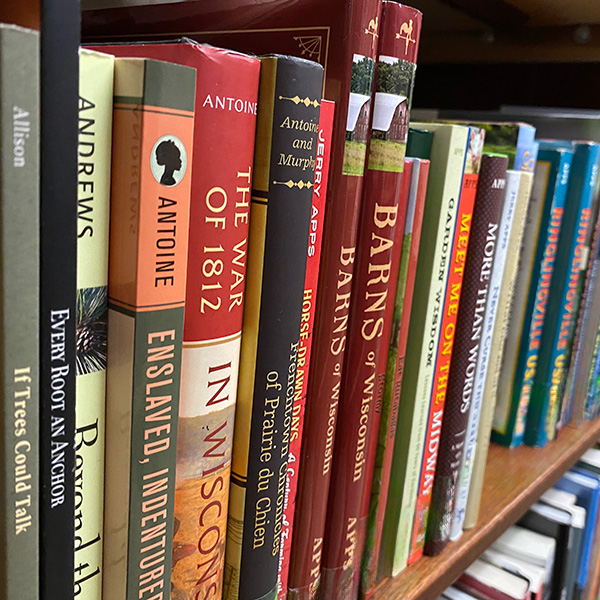
The Wisconsin Historical Society Press publishes its first book, connecting readers to the past—a tradition that continues today with dozens of titles each year highlighting diverse voices on wide-ranging topics.
A Proper Collection Begins
1855-1865
Draper solicits donations from historians and public figures and asks Wisconsin army officers to preserve and donate war relics and soldier diaries. In his first year, the library grows to more than 2,000 books and pamphlets.
Civil War Diaries Collected
1861
Soldiers at Camp Randall keep diaries at Draper's request. Mailed back after the war, they are now among the most valuable items in the archives, used by researchers worldwide to understand the impact of the Civil War on the local community, the state, and the world.
Impact Expands
1876-1914
Largest Archival Collection West of D.C.
1876
By 1876, the Society stewards the nation’s largest archival collection west of Washington, D.C. and welcomes between 20,000 and 35,000 visitors each year.
Thwaites Expands Access
1887
The Society’s new executive officer, Reuben Gold Thwaites, sends staff to libraries across the country to collect, preserve and share Wisconsin-related documents. To serve new audiences, he also opens the Society’s library to UW students for the first time.
"The Matriarchy” Makes Waves
1887-1901
Thwaites hires Annie Nunns, Mary Stuart Foster, and Iva Welsh—later known as “The Matriarchy” or "The Big Three"—whose tremendous impact strengthens the Society’s reputation as one of America's leading historical institutions.
Affiliate Program Begins
1899
Thwaites encourages the development of local historical societies and Green Bay and Ripon become the first to affiliate in 1899. The Society’s affiliates program has since grown to more than 400 affiliates statewide, strengthening local history and preservation across Wisconsin.
A Landmark Library Opens
1900
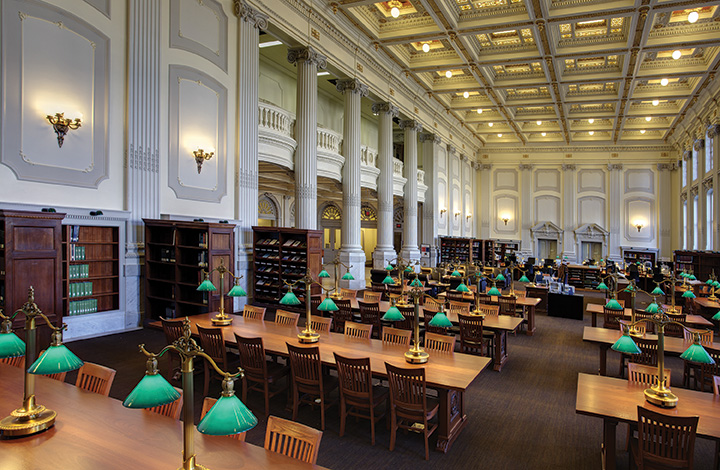
A new Neoclassical Revival library to house the Society’s growing collection is dedicated on October 19, 1900, in Madison. The building, designed by Milwaukee's Ferry & Clas, is still considered one of the finest buildings of its kind in Wisconsin.
Museum Division Created
1907
The Wisconsin Historical Society organizes a new museum division and hires Charles E. Brown to lead its development, expanding its mission impact beyond library and archives.
Civil War Governors’ Papers Acquired
1914-1917
The papers of Wisconsin's Civil War governors are acquired, adding a significant collection of primary source material documenting Wisconsin's role in a nation-defining moment.
Opening New Doors
1917-1966
First issue of the Wisconsin Magazine of History
1917
The Wisconsin Magazine of History publishes its first issue. This award-winning publication remains a much-loved benefit of Wisconsin Historical Society membership.
Formal Designation as State Archives
1947
The Thomson Public Records Act is created, designating the Wisconsin Historical Society as the permanent archival depository for Wisconsin state records, formalizing its role as the state's institutional memory.
Villa Louis Opens
1952
The Wisconsin Historical Society opens Villa Louis to the public, making the immaculately restored Victorian house museum the first historic site to be operated by the Society.
Wade House Historic Site Opens
1953
Wade House Historic Site opens under the Wisconsin Historical Society. The 27-room Greek Revival inn and surrounding grounds celebrate horse-powered travel and 19th-century Wisconsin life.
Wisconsin Historical Foundation Established
1954
The Wisconsin Historical Foundation is established as the nonprofit fundraising arm supporting the mission work of the Wisconsin Historical Society.
Stonefield Opens
1954
Stonefield, the country estate of Wisconsin's first governor Nelson Dewey, is designated a Wisconsin Historical Society historic site. By 1961, more than 40 structures make up the Stonefield village and the State Agricultural Museum joins the site in 1971.
Madeline Island Museum Opens
1958-1968
Bella and Leo Capser open Madeline Island Museum in 1958, cataloguing Indigenous and immigrant island history. The museum is donated to the Wisconsin Historical Society in 1968.
Circus World Opens
1959
Circus World, the original winter quarters home to the Ringling Bros. Circus from 1884 to 1918, opens under the Wisconsin Historical Society on July 1, 1959.
National Preservation Partner
1966
The National Historic Preservation Act designates the Society as Wisconsin's advisor and gatekeeper for the National Register of Historic Places, cataloguing significant historic sites statewide.
From Archives to Online
1960s-2008
Civil Rights Movement Collecting
1960s
To document history as it happens, Wisconsin Historical Society field workers travel the South during the Civil Rights movement, collecting more than 100,000 pages of letters, photos, and documents from Civil Rights trailblazers including Daisy Bates and Amzie Moore.
Pendarvis Opens
1971
Pendarvis, a recreation of Wisconsin mining life and Cornish traditions, was donated to the Wisconsin Historical Society in 1970 and opens to the public the following year.
Old World Wisconsin Opens
1976
Old World Wisconsin, a 600-acre living history destination, opens as Wisconsin’s way of celebrating the nation’s bicentennial. The massive undertaking was designed to allow guests to experience the world of the state’s early immigrants.
State Historical Museum Moves to the Square
1980-1986
On July 18, 1980, the Wisconsin Historical Society purchases a former hardware store on Madison’s Capitol Square and renovates it into the state’s new historical museum, opening in 1986 with 17,500 square feet of exhibition space.
Collections Go Digital
1980-1993
The Society receives the first National Historical Publications and Records Commission (NHPRC) grant focused on electronic records. Collections are computerized throughout the 1980s and the organization makes its catalog publicly available on the internet in 1993.
State Preservation Programs Strengthen
1987
The legislature approves a new state register of historic places, a tax credit program, and zoning tools to help save irreplaceable historic resources and promote investment across Wisconsin.
First Capitol Opens
1994
First Capitol—where the first territorial legislature established Wisconsin’s territorial government before relocating to Madison—opens to the public under the Wisconsin Historical Society.
Northern Great Lakes Visitor Center Opens
1998
The Northern Great Lakes Visitor Center opens as a unique partnership involving the Wisconsin Historical Society, US Forest Service, National Park Service, US Fish & Wildlife Service, UW-Extension, and the Friends of the Center Alliance.
H.H. Bennett Studio Opens
2000
The studio of celebrated 19th-century Wisconsin Dells photographer, H.H. Bennett, is donated to the Wisconsin Historical Society and opened to the public, preserving a landmark of American photography.
Membership Milestone Reached
2001
Wisconsin Historical Society membership surpasses 10,000 members, reflecting growing public investment in preserving and sharing state and national history.
Historic Images Digitized
2001
What started as an initial 200 historic images posted online following the launch of a new Image Management Systems has grown into a fully operational digital lab, continuously expanding public access to the Society's immense collections.
State Funds for a New Home for History
2001
Governor Thompson announces state funds for a new history museum during the 2001 State of the State address, beginning the journey toward a transformative new cultural destination for Wisconsin.
Black Point Estate Opens
2007
Black Point Estate & Gardens opens after William O. Petersen donates the 20-room Queen-Anne style mansion, its grounds, and Victorian-era furnishings to the state in 2005 for use as a historic site.
Reed School Opens
2007
Reed School, an embodiment of 19th and early 20th century one-room schools that shaped rural American education, opens under the Wisconsin Historical Society.
New Textbook for 4th Graders
2008
The Wisconsin Historical Society Press publishes the first edition of Wisconsin: Our State, Our Story. Today, more than 50,000 students use this official state history textbook annually alongside additional classroom resources—from curriculum-aligned field trips to educator tools, and the state’s National History Day program administered by the Society.
Building for the Future
2018-present
State-of-the-art preservation facility opens in Madison
2018
The State Archive Preservation Facility opens in Madison, ensuring entire warehouses of irreplaceable content are safeguarded for future generations.
Documenting a Global Pandemic
2020
Inspired by the 1861 Civil War diary project, the Wisconsin Historical Society calls on Wisconsinites to document their COVID-19 experiences with journals to be submitted into the collections as part of the historical record, continuing the organization’s longstanding tradition of collecting history as it happens.
Wisconsin Shipwreck Coast Designated as a National Marine Sanctuary
2021
The Wisconsin Shipwreck Coast National Marine Sanctuary, was designated in August 2021 and is comanaged by NOAA and the Wisconsin Historical Society.
Ancient Canoes Recovered from Lake Mendota
2021-2024
In 2021, Wisconsin Historical Society maritime archaeologists located a 1,200-year-old dugout canoe in Lake Mendota and worked with First Nations to recover the vessel for learning and preservation. By 2025, 16 ancient canoes are identified in the same lakebed, with the oldest carbon dated to 5,200-years-old, predating the Great Pyramid of Giza. The first recovered canoe is destined for exhibition in the Wisconsin History Center.
Wisconsin History Center Breaks Ground
2025
On April 23, 2025, the Wisconsin Historical Society—joined by local, state and First Nations leadership—breaks ground on the new Wisconsin History Center, kicking off the next chapter of the Society’s story.
A New Brand, Powered by Perspective
2026
The Wisconsin Historical Society unveils a new brand and fully redesigned website to introduce new audiences to the life changing power of historical perspective. The organization keeps Wisconsin Historical Society as its formal name, while introducing “WisHistory” as a shorter, more welcoming moniker for public engagement opportunities.

Wisconsin History Center
A landmark cultural destination designed to share the rich, vast, and varied stories of the people who have shaped the state. Featuring world-class exhibits, community gathering spaces, immersive moments, and interactive experiences, this landmark venue will showcase Wisconsin's impact on America and inspire exploration across all 72 counties.
Learn MoreOur Teams





Visit Us
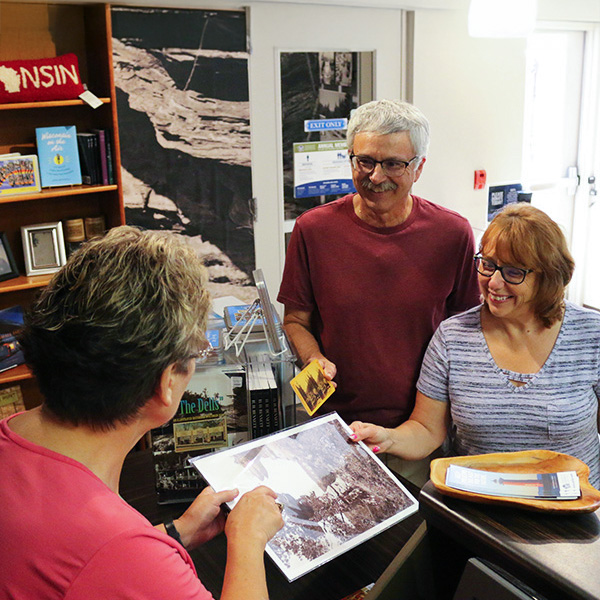
From expert genealogy advice to immersive museum experiences, we help you connect the dots—and the generations.
Your history is waiting. Let’s explore it together.




Stay Connected to the Latest in Wisconsin History
History never stops. Connect with us and stay up to date on Wisconsin events, stories, donation and membership opportunities, volunteering and more.
Get in Touch


